Cascara is one of those ingredients that sounds niche until you taste it. Then it just sounds like something you should've been drinking for years.
It's fruity. It's lightly tangy. It's got this cola-adjacent quality when you add bubbles that makes it immediately familiar and completely new at the same time. And despite coming from the coffee plant, it doesn't taste like coffee at all.
Here's the full picture.
Cascara Is Coffee's Other Drink
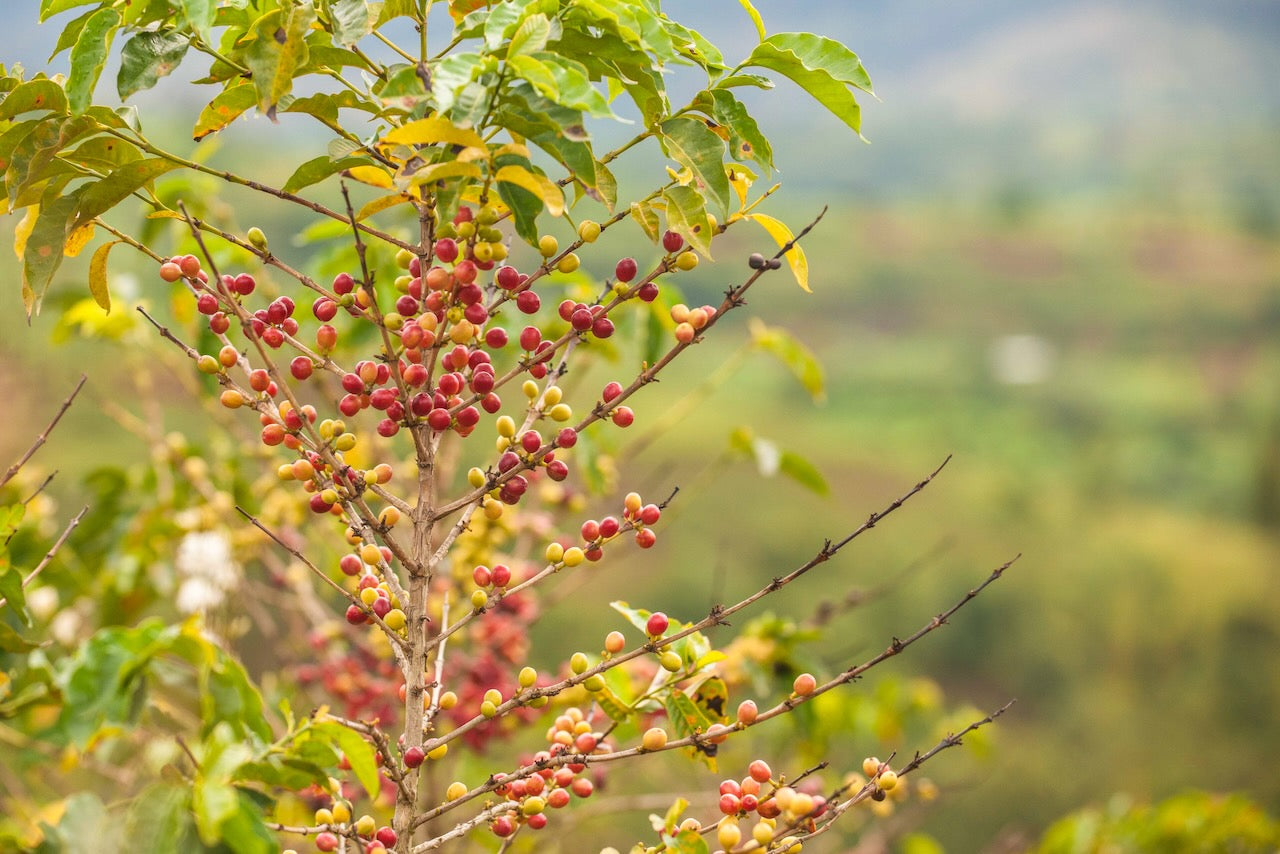
Most people think of coffee as starting with the bean — but the bean is actually the seed inside a fruit. That fruit is called the coffee cherry. It's small, roughly the size of a grape, and it turns red when it's ripe and ready to harvest.
When coffee is processed, the cherry is stripped away to get to the seed inside. For most of coffee's commercial history, that fruit — the skin, the pulp — got discarded as agricultural waste.
Cascara is what happens when you don't throw it away.
The word cascara comes from the Spanish cáscara, meaning husk or shell. In practice it refers to the dried coffee cherry — the fruit that surrounds the bean — which can be brewed like a tea or processed into a syrup. The result is a beverage that tastes nothing like coffee and everything like something you want to drink all summer.
Where Does Cascara Come From?
Cascara isn't a trend — it's ancient. Drinks made from the coffee cherry have been consumed in Ethiopia and Yemen for centuries, arguably longer than people have been roasting the beans.
In Yemen, a spiced coffee cherry drink called qishr has been popular for generations — often more so than coffee itself. In Ethiopia, similar preparations called hashara and geshar have been part of local culture since coffee cultivation began there.
What's relatively new is cascara reaching Western specialty coffee culture. It's been gaining a foothold in independent cafés over the last decade, and it's now finding its way into sparkling beverages, mocktails, and cocktails as bartenders and drink-makers discover how well it mixes.
What Does Cascara Taste Like?
This is the question most people have — and it's hard to answer without just telling you to try it.
The closest analogies:
- Tart cherry — fruity and slightly sour, not sweet-sour like candy
- Rosehip tea — floral and tangy with natural complexity
- Hibiscus — that bright, acidic quality that works so well in cold drinks
- Brown sugar with fruit — a gentle sweetness that comes from the fruit itself
- Cola — especially when carbonated; there's something about the combination of cascara and bubbles that reads cola-adjacent without any artificial flavoring
Cascara does not taste like coffee. If you give it to someone without telling them what it is, they'll rarely guess the connection. The fruitiness takes over completely.
Cascara as a Syrup vs. Brewed Cascara Tea
Brewed cascara is made by steeping the dried husks in hot water, similar to making tea. The result is a light, fruity drink that can be served hot or iced. Specialty cafés often serve it this way. The flavor is delicate and clean.
Cascara syrup is a concentrated version — the flavor of cascara extracted and preserved in a sweetened base. It's more versatile and easier to use at home. You don't need to brew anything; just add it to sparkling water, espresso, or a cocktail and you're done in seconds. It also stores well.
The Cascade is a cascara syrup — specifically a cascara and lemon syrup made in small batches in Portland. The lemon complements the natural fruitiness of the cascara and makes it particularly well-suited for sparkling drinks.
How to Drink Cascara Syrup
The simplest version takes about thirty seconds:
Cascara Sparkling Refresher: 1 oz The Cascade Syrup + 8 oz sparkling water + ice + squeeze of lemon. Pour over ice, add sparkling water, finish with lemon.
Cascara Latte — 1 oz syrup in espresso with steamed milk. The cascara adds a fruity note that makes the whole drink taste brighter.
Cascara Mocktail — The Cascade over ice with sparkling water, a slice of orange, and a sprig of mint.
Cascara Cocktail — Works well with gin, rum, or tequila. The tartness cuts through spirits cleanly and adds complexity without sweetness.
Why Cascara Also Makes Sense Right Now
The coffee cherry is typically the most discarded part of one of the world's most-consumed crops. Using it to make cascara means transforming that byproduct into something valuable — closing the loop on a crop that has historically thrown most of itself away. For people who care about where their food and drink comes from, that's not a minor detail. It's the whole origin story.
People Also Ask
Is cascara caffeinated?
Yes, but less than coffee. Cascara contains roughly 25–30mg of caffeine per serving, compared to 95mg in a typical cup of coffee — closer to a cup of green tea.
Is cascara the same as cascara sagrada?
No. Cascara sagrada is a laxative from buckthorn bark. Cascara (the drink) comes from the coffee cherry and has no laxative properties.
Does cascara taste like coffee?
Not really. The fruity character of the coffee cherry comes through much more than any roasty quality. Most people who don't like coffee enjoy cascara without hesitation.
Is cascara safe to drink every day?
Yes. It's been consumed regularly for centuries in Ethiopia and Yemen. Low caffeine content makes it a reasonable everyday drink for most people.
Where can I buy cascara syrup?
The Cascade is available here — a small-batch cascara and lemon syrup made in Portland, Oregon.